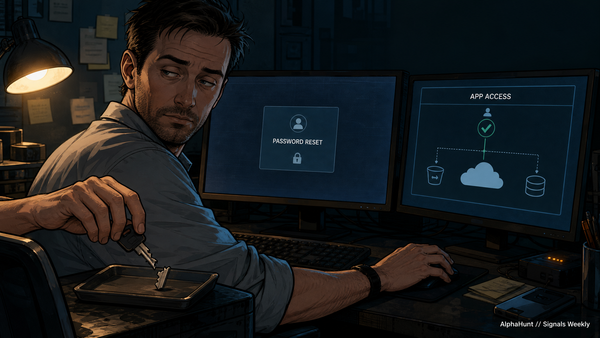
[GAME THEORY] The Criminal Host Sold a Recovery Plan
Virtualine promised to move customers after law-enforcement requests. Test who can restore the service—not just who registers next.


On October 27, the U.S. Department of Justice announced the seizure of virtualine.net, the website of a hosting service it says catered to criminals. Its account includes an unusually explicit sales promise: after an official law-enforcement request, Virtualine would move a customer's infrastructure to another shell company and reactivate the server. [1]
The advertised product was continuity, not just hosting. For a defender deciding whether to keep tracking a disrupted provider, the useful question is whether it can still deliver that product.
Our judgment: Track whether the host restores a known customer—not merely whether its brand returns.
That restoration has not been demonstrated in the reviewed evidence. And even if the host loses its recovery capability, customers with their own backups, credentials, funds, and replacement hosting may rebuild without it. Provider failure and customer failure are different outcomes.
The advertisement establishes the promise, not the performance
DOJ reports that Virtualine advertised the protection plan in March 2026. It also alleges that the host continued supporting a service distributing abusive intimate material despite repeated notices. These are serious allegations about real harm; the recovery question matters because continued customer service can mean continued victimization. [1]
The release establishes a documented account of the sales proposition. It does not establish that the plan worked after the seizure, who controlled a successor, or which restoration dependencies investigators removed. We reviewed the official release, not the underlying court filings.
Here is one useful distinction to take into a case review: if a known customer's service reappears at another host, record customer continuity. Do not upgrade that to provider-assisted recovery until evidence connects the original provider to the move. A returning application and a shared network are leads; the customer may have bought new hosting independently.
That gives an analyst a bounded next check: look for corroborated provider involvement in restoring the known service, rather than spending the next hour treating every replacement domain as a comeback.
Below the tear: how to compare the host's and customer's options, separate three explanations for a returning service, and make a finite monitoring review defensible.
Recovery works only while someone can assemble the parts
The relevant contest is over who can turn a customer's saved state into a working service, at an acceptable cost and risk.