[SIGNALS WEEKLY] Cascading Trust Failures: From PHP2Shell to PKI
Check the access that survives a password reset, a PHP patch, or a browser trust update.

The fast read
PHP2Shell needs patching and a look behind the web tier. The ConnectWise Cloud Backup and LiteLLM compromises put a different question on the desk: what access survives after the obvious fix? Meanwhile, eMudhra certificate replacement needs attention beyond the browser, including services with their own trust stores.
Start with exposed PHP and evidence of exploitation, then application credentials and grants in affected cloud environments. Keep longer-term OAuth persistence and certificate-transition outages on the watch list; neither is a reason to declare every authorized application compromised or every TLS failure malicious.
Our judgment: Close the exposed path, but do not mistake that for proof that the access or trust it enabled has been removed.
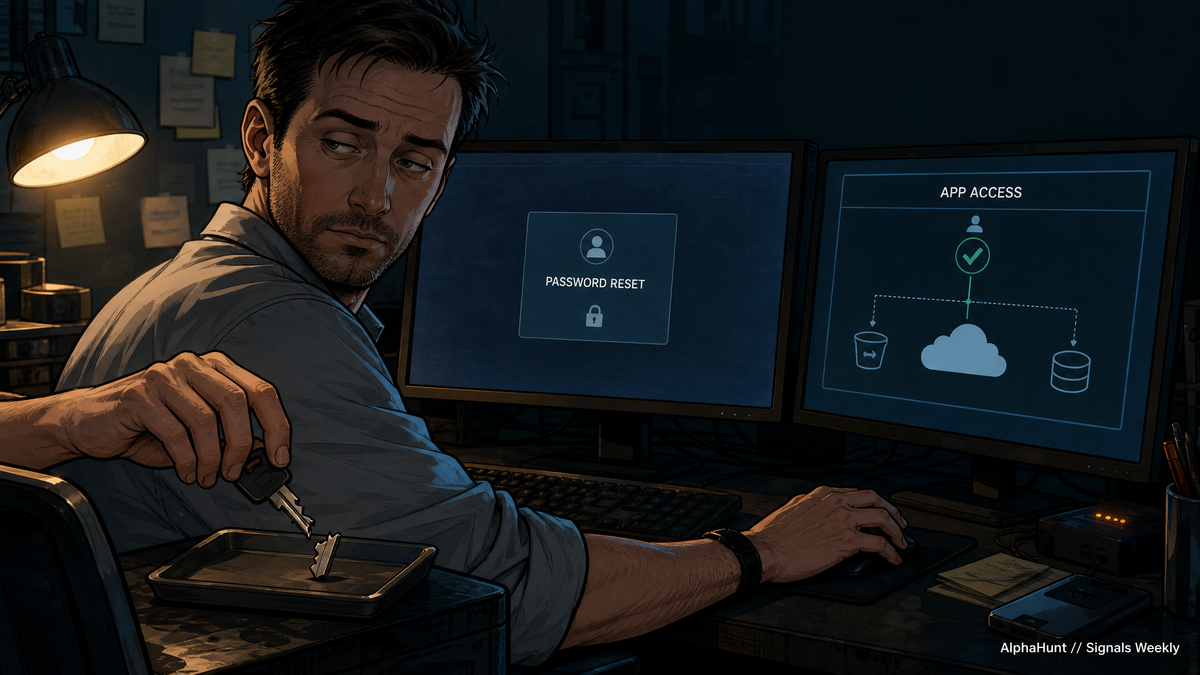
A password reset does not close application access
The report links the ConnectWise Cloud Backup supply-chain compromise to Storm-0940, citing Microsoft's assessment of an ARTEX-assisted campaign. The relevant mechanism is abuse of OAuth applications already authorized in customer environments: application access can operate without an interactive user sign-in. The report also flags new application credentials and privilege changes as persistence concerns. [7–9]
That changes where to look. A user-focused sign-in review can miss service principal activity; a password rotation does not, by itself, revoke application consent or remove an application's credentials. Review those access surfaces separately rather than treating a successful reset as an investigation's finish line. [7, 15]
The limit matters just as much. An affected application is a lead to investigate, not a finding that every tenant lost data. Attribute the campaign assessment to Microsoft, and use tenant activity to establish what happened locally. The practical result is a bounded next check: service principal sign-ins, consent grants, credential additions and privilege changes, correlated with Microsoft Graph activity. [7, 15]
The remaining signals need different checks: evidence left behind on the web tier, what a compromised Python environment could read, and which certificate chains non-browser clients still trust.
Patch PHP and investigate the exposure window separately
Patching and intrusion scoping answer different questions. The first closes a route; the second tests whether someone already used it.