Modular C2 Frameworks Quietly Redefine Threat Operations for 2025–2026
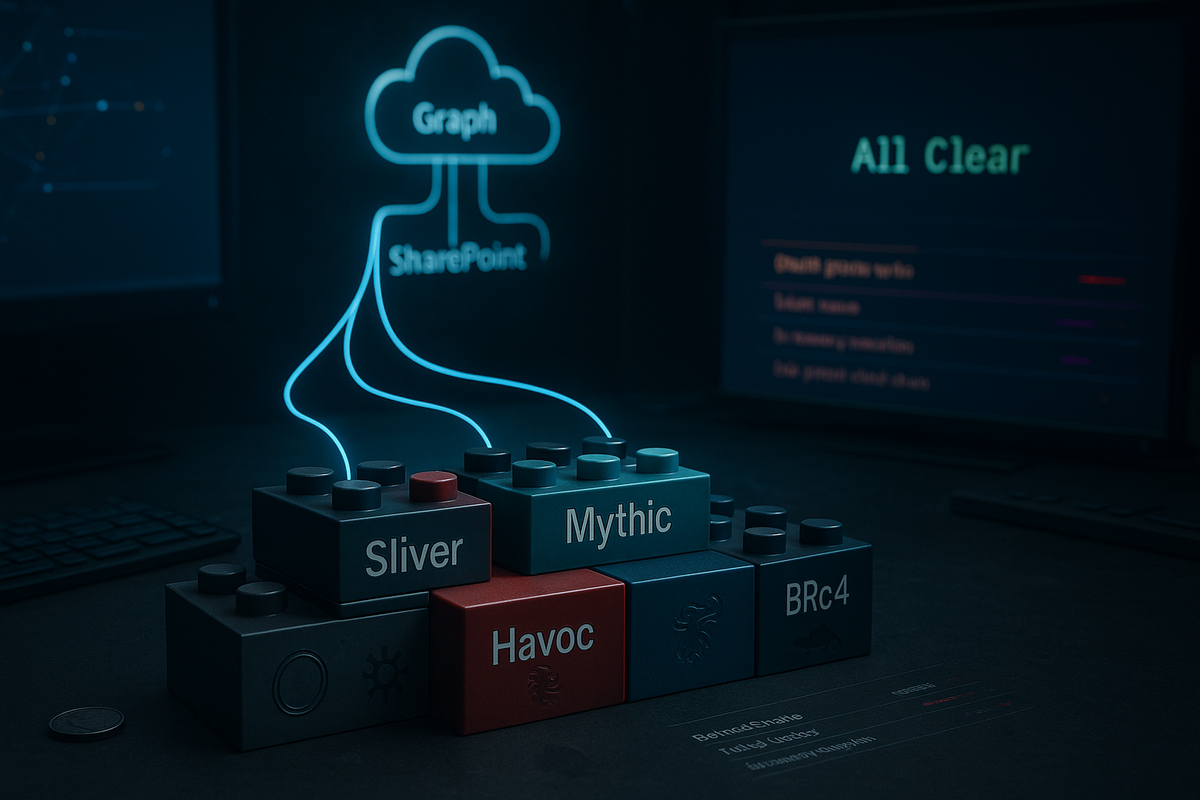
Attackers are rapidly shifting to modular, cloud-integrated C2 frameworks—Sliver, Havoc, Mythic, Brute Ratel C4, and Cobalt Strike—blurring lines between APT and cybercrime. These tools’ stealth, automation, and cloud API abuse are outpacing legacy detection, demanding urgent defensive adaptation.
This is an update to an original article I wrote mid-summer of 2024... oh what a ways we've come. Enjoy!!
TL;DR
Key Points
- Prioritize detection of modular, cloud-integrated C2 frameworks (Sliver, Havoc, Mythic, Brute Ratel C4, Cobalt Strike)
- Monitor for abuse of PowerShell/Python, in-memory payloads, and cloud APIs (Microsoft Graph, SharePoint)
- Update IR playbooks and conduct red team exercises using emerging C2 tools
- Harden EDR/XDR, restrict scripting, and enforce memory integrity controls
- Track operational overlap and tool-sharing between APT and cybercriminal groups
The story in 60 seconds
Attackers are moving away from legacy C2 tools like Cobalt Strike and Metasploit, favoring modular, open-source, and commercial frameworks—Sliver, Havoc, Mythic, and Brute Ratel C4. These frameworks offer encrypted, multi-protocol C2, in-memory payloads, and seamless integration with cloud APIs, complicating detection and response.
Recent campaigns (Ivanti zero-days, ClickFix, GOFFEE) show threat actors embedding C2 traffic within trusted cloud services, automating post-exploitation, and sharing tools across APT and cybercriminal lines. This operational convergence is accelerating, with attackers customizing agents and leveraging micro-service architectures for resilience.
Defenders must adapt by prioritizing behavioral analytics, hardening endpoints, and updating IR playbooks. The next wave of C2 frameworks is expected to leverage AI, expand multi-channel comms, and deepen OPSEC, raising the bar for detection and response.
AlphaHunt
Stop doomscrolling, start decisioning. We chewed through the muck so your team doesn’t have to. → Subscribe! • Forward to your on-call lead.
(Have feedback? Did something resonate with you? Did something annoy you? Just hit reply! :))
Why it matters
SOC
- Watch for encrypted C2 over HTTP(S), DNS, and cloud APIs (Microsoft Graph, SharePoint)
- Flag reflective DLL injection, in-memory payloads, and non-standard C2 channels
- Alert on anomalous PowerShell/Python activity, especially tied to cloud service use
IR
- Preserve memory dumps and process trees for in-memory/reflective payload analysis
- Triage for persistence via renamed system daemons or cloud API abuse
- Collect forensic evidence of token manipulation and lateral movement
SecOps
- Deploy and tune EDR/XDR for in-memory and reflective injection detection
- Restrict PowerShell/Python execution; enforce application whitelisting
- Enable network segmentation and monitor for suspicious cloud service traffic
Strategic
- Invest in behavioral analytics and cloud monitoring capabilities
- Update incident response and tabletop exercises for new C2 frameworks
- Track convergence of APT and cybercrime TTPs for attribution and risk assessment
See it in your telemetry
Network
- Detect encrypted C2 over HTTP(S), DNS, and cloud APIs (Microsoft Graph, SharePoint)
- Monitor for non-standard C2 channels (Slack, Telegram, custom TCP)
- Flag anomalous traffic patterns from edge/gateway devices (Ivanti, VPNs)
Endpoint
- Alert on reflective DLL injection, in-memory payloads, and process injection (T1055)
- Monitor PowerShell/Python execution, especially with cloud service access
- Track creation of suspicious daemons or renamed system files
High Impact, Quick Wins
- Deploy YARA rules and threat intel for Sliver, Havoc, Mythic, Brute Ratel C4, and Cobalt Strike artifacts
- Restrict and monitor scripting interpreters (PowerShell, Python) on endpoints
- Conduct red team exercises using emerging C2 frameworks to validate detection and response
Research
Top 5 Emerging and Popular C2 Frameworks (2025–2026)
This analysis identifies and details the top 5 most prominent and rapidly emerging Command and Control (C2) frameworks leveraged by both nation-state/APT and cybercriminal threat actors as of late 2025 and projected into 2026. Each section provides a technical overview, unique features, adoption and trending patterns, and operational impact. All URLs have been validated for relevance and authority.
![[GAME THEORY] The exploit is only one part of the business](https://storage.ghost.io/c/06/e5/06e5730b-7d78-4713-9cec-6cba31d297f5/content/images/size/w600/2026/10/alphahunt-game-theory-the-exploit-is-only-one-part-of-the-business-hero-2026-10-13.png)
![[GAME THEORY] The OAuth Prompt Is Becoming the New Diplomatic Pouch](https://storage.ghost.io/c/06/e5/06e5730b-7d78-4713-9cec-6cba31d297f5/content/images/size/w600/2026/10/alphahunt-game-theory-the-oauth-prompt-is-becoming-the-new-diplomatic-pouch-hero-2026-10-08.png)
![[SIGNALS WEEKLY] Hidden Paths: Trusted Tools as Covert Access Channels](https://storage.ghost.io/c/06/e5/06e5730b-7d78-4713-9cec-6cba31d297f5/content/images/size/w600/2026/10/alphahunt-signals-weekly-hidden-paths-trusted-tools-as-covert-access-channels-hero-2026-10-06.png)
![[DEEP RESEARCH] When the patch queue becomes the threat model](https://storage.ghost.io/c/06/e5/06e5730b-7d78-4713-9cec-6cba31d297f5/content/images/size/w600/2026/10/alphahunt-deep-research-when-the-patch-queue-becomes-the-threat-model-hero-2026-10-02.png)