
[DEEP RESEARCH] Who Generated the Baseline Your Detector Trusts?
KUKURAT can manufacture ordinary-looking activity. Test whether your detector loses the intrusion—or gains another clue.

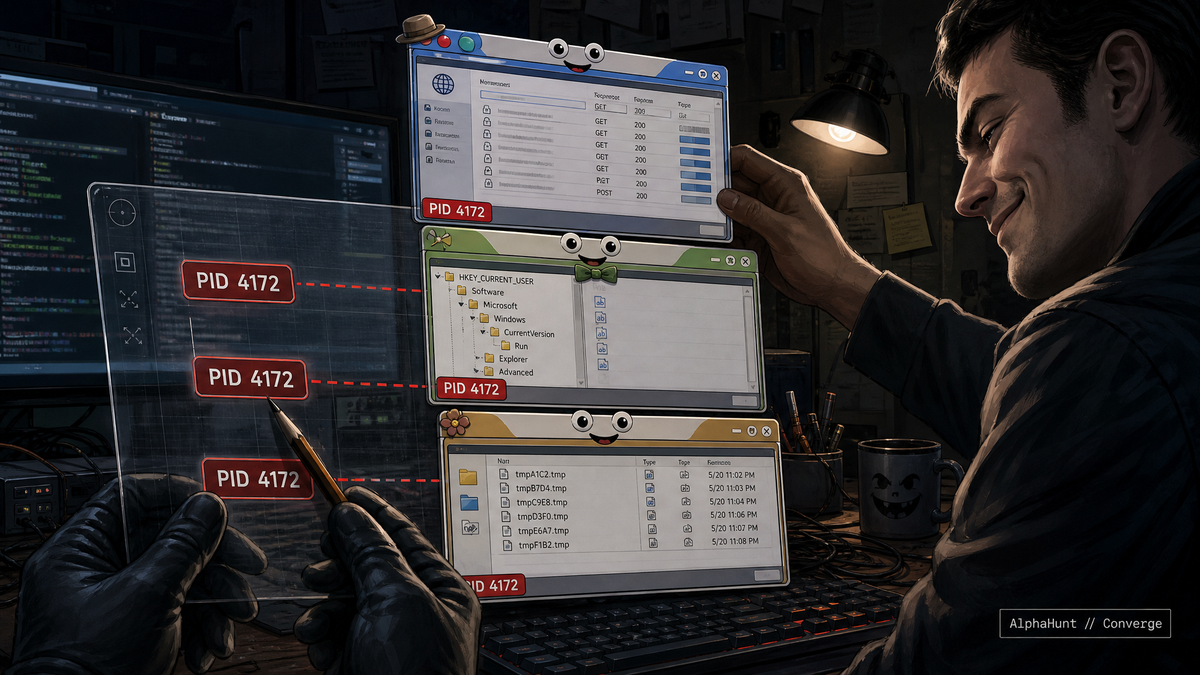
A familiar triage decision: a process looks suspicious, but its anomaly score is low. Does it move down the queue?
Unit 42’s November 16 report gives defenders a reason to check the answer. KUKURAT, malware deployed in Southeast Asian government networks by March 2026, supports generating ordinary-looking web requests, registry operations and temporary-file activity alongside its other operations.[1]
An anomaly detector measures how unusual activity looks against an expected pattern. It does not directly measure whether a host is compromised. When the suspected process can manufacture some of the apparent background, “looks normal” needs context.
Our judgment: Let a low score reduce suspicion only when the detector saw the necessary evidence—and comparable cases show that the score actually argues against compromise.
The lesson is not “noise defeats detection.” It is check who produced the noise before deciding what it means.
Familiar activity can become evidence when you identify its author
KUKURAT can imitate registry operations associated with Chrome crash recovery.[1] Consider this hypothetical comparison:
- A browser performs those operations: potentially routine maintenance.
- The process under investigation performs them: browser-like activity now needs a different explanation.
The operation looks familiar in both cases. The producer changes the question. A host-wide activity total can lose that distinction; process-linked records can preserve it. Knowing the producer does not make every action malicious.
Before dismissing the activity as browser noise, check its originating process instance and verified relationships. Keep pursuing stronger compromise evidence already in hand; this check is not a prerequisite for response.
The KUKURAT evidence has clear limits:
- Capability: Configurable network, registry and file camouflage exists.
- Use: The displayed hard-coded defaults are off. Case-specific configuration and attributed events are needed to establish enablement and execution.
- Effect: The public evidence reviewed for this issue does not establish a measured detection loss through a matched comparison.[1]
Nor does it establish that an attacker successfully retrained a detector’s learned baseline. Generating background activity and changing what a model learns are different claims.
Extra activity could conceal the incident, change nothing, or supply another clue. The useful test allows all three answers.
Below the tear: how to distinguish those outcomes—and decide whether the remedy is better visibility, different detection logic or a different platform.
Hold the incident constant; change the background’s producer
Ask the detection owner for a matched comparison using authorized offline replay of fixed, inert event records or approved historical telemetry. This is a proposed evaluation, not a reported KUKURAT experiment.