weekly
[SIGNALS WEEKLY] Edge Pressure, AI Scale, and Quiet Supply-Chain Drift
Patch the Ivanti chain without mistaking it for recovery; separate AI workflow acceleration from stolen model access.
weekly
Patch the Ivanti chain without mistaking it for recovery; separate AI workflow acceleration from stolen model access.
weekly
Check the access that survives a password reset, a PHP patch, or a browser trust update.

deep
French refrigeration hacks expose a maintenance gap: prove safe settings, controlled access and recovery before renewal.
weekly
Reconstruct short update-tampering windows, trace edge access into virtualization, and separate payload blocking from credential access.
deep research
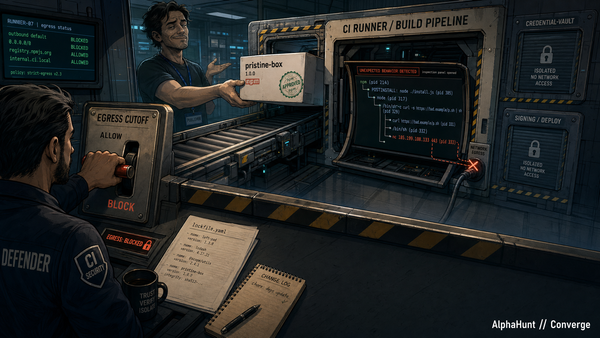
A practical operating model for package admission, runtime detection, and proving downstream impact before the trail goes cold.
weekly
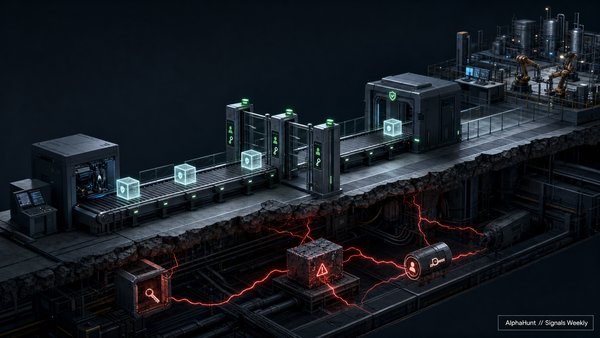
The quiet failure mode in this week’s signals is trust doing exactly what it was configured to do—for the wrong operator. A TeamCity foothold can expose secrets and poison downstream artifacts..

deep
Attackers are adapting to how trust gets granted. They are abusing dependency and build graphs, CI runners, and AI-assisted review to compromise the full path from maintainer to release.

weekly
Edge exploits, helpdesk vishing, stolen CI tokens, and decentralized C2 share one objective: scale access while shrinking defender visibility. Hunt the transitions, not just the opening IOC.

weekly
The perimeter kept the keys. Edge appliances and OT switches are becoming the shortest path from exposure to stolen identity and ransomware. The plumbing became the persistence layer.

forecasts
Supply-chain attacks are becoming access pipelines. The defender move is to follow credentials, not just packages.

deep
Cyber-enabled cargo theft is less about malware novelty and more about who gets trusted to move the load.

weekly
Fortinet VPN portals are getting probed. npm installs can execute more than your build expected. And now the AI conversation is not “someday” — it is about compressed timelines.