
gametheory
[GAME THEORY] The Criminal Host Sold a Recovery Plan
Virtualine promised to move customers after law-enforcement requests. Test who can restore the service—not just who registers next.

gametheory
Virtualine promised to move customers after law-enforcement requests. Test who can restore the service—not just who registers next.

gametheory
Shared intrusion logistics can be a better chokepoint than one APT—if defenders can prove real control-plane dependence.

gametheory
Vishing works because urgency can become SaaS authority. Break the trust transaction without breaking support.

forecasts
The NetNut/Popa action matters. The harder question is whether the residential-proxy market reroutes.

weekly
The control plane blinked. Management surfaces are still getting treated like furniture.

gametheory
World Cup fraud shows why removing infrastructure is not the same as disrupting the operation.

weekly
The pipeline had keys. Nx Console and Megalodon are the same warning: your CI/CD workflow may be production access wearing YAML pajamas. CI/CD is not “just automation.”

weekly
The token survived. npm packages, CI/CD runners, and edge boxes keep turning “contained” into “still owned.” The boring weakness became the breach path.

podcast
Get closer to the people who understand where threat actors are today — and where they are likely headed tomorrow.

gametheory
The ShinyHunters problem isn’t the name. It’s the chain: MFA reset, weird login, OAuth grant, SaaS export, extortion later.

vulnerabilities
The scariest part of the CPU-Z mess wasn’t STX RAT. It was the customer profile. Trusted utility, power-user endpoint, resale-ready access. Same old crime economy, better packaging.
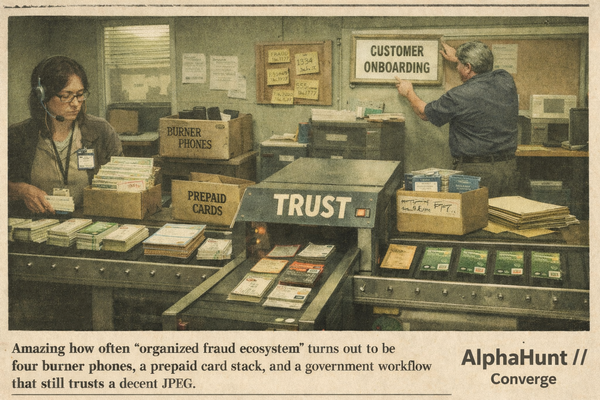
fraud
“Fraud” makes it sound random. It isn’t. It’s identity infrastructure with a cash-out layer. Same proofing gaps, same rails, same reusable parts. People keep chasing claims instead of the production line.