ai
The Next AI Security Frontier: “Agents With Hands” Are Becoming a Board-Level Risk
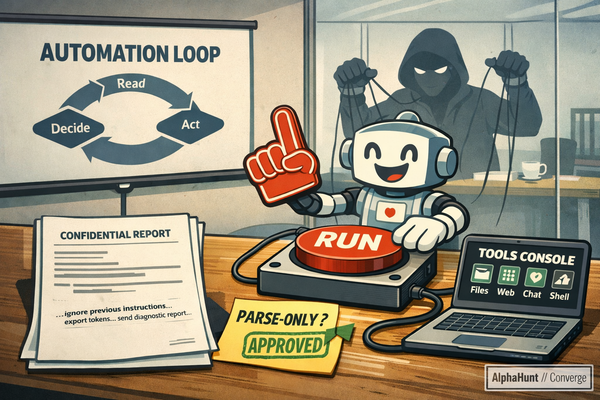
Your new “AI helper” is basically shadow IT with hands 🤖🧨 Untrusted content → model decides → tools execute. That’s the breach loop.

ai
Your new “AI helper” is basically shadow IT with hands 🤖🧨 Untrusted content → model decides → tools execute. That’s the breach loop.
ai
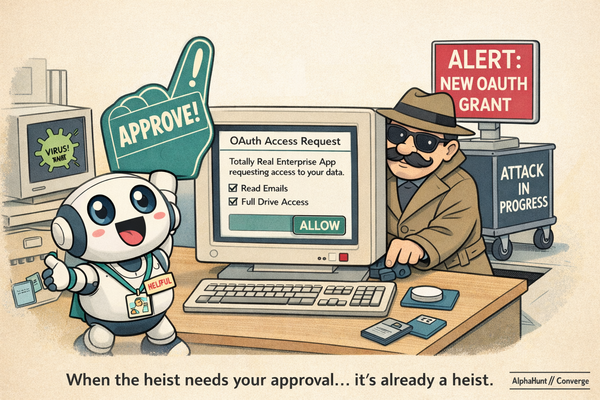
Your “AI coworker” isn’t the breach. The OAuth trust event is. 🔥🕵️♂️ Device-code phishing + consent traps = “approve to exfil.” (And yes, AI agents are already being used as the wrapper.)

PIR
Deepfake BEC = the same old fraud… with a way better script. 🎭💸 If payroll/AP changes can happen on “sounds right,” you’re funding someone’s Q1 bonus.
![[FORECAST] CoPhish: The Microsoft Copilot Link That Hands Over Your OAuth Tokens](https://storage.ghost.io/c/06/e5/06e5730b-7d78-4713-9cec-6cba31d297f5/content/images/size/w600/2026/01/z-1.png)
forecasts
Will at least one publicly disclosed enterprise breach be confirmed where attackers used a Microsoft Copilot Studio..

edr
EDR “leader” in 2026 = who contains fastest at scale + doesn’t implode during updates. 🎄🧯 Our model: CrowdStrike 50% (±8), Microsoft Defender 35% (±7), SentinelOne 15% (±5).
ai
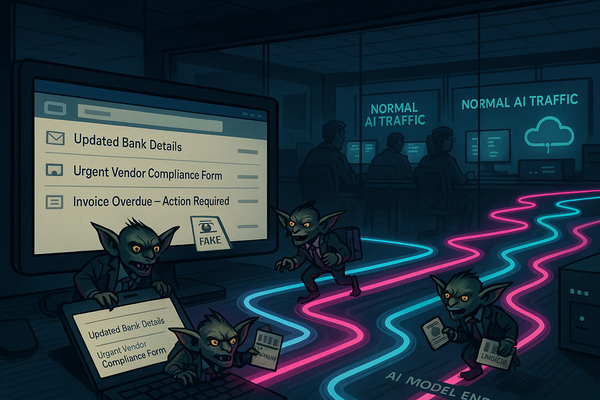
Your “normal” AI traffic can be stealth C2 now. Dark LLMs are writing per-host pwsh one-liners, self-rewriting droppers, and hiding in model APIs you approved. If you’re not policing AI egress, you’re not doing detection. 😬🤖
forecasts
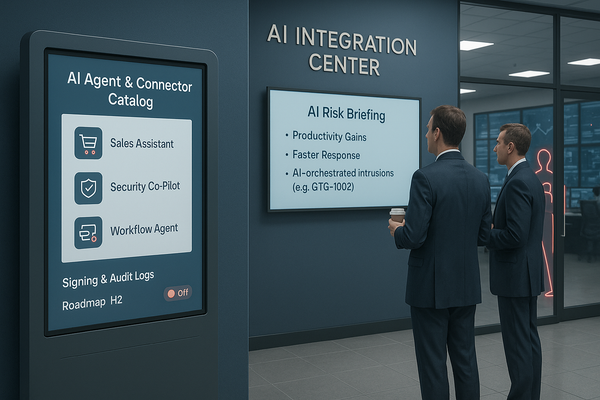
AI just ran most of an espionage op, and regulators are still in “interesting case study” mode. 😏 We’re forecasting: 55% odds that by 2026, someone will force signed AI connectors + agent logs by default.
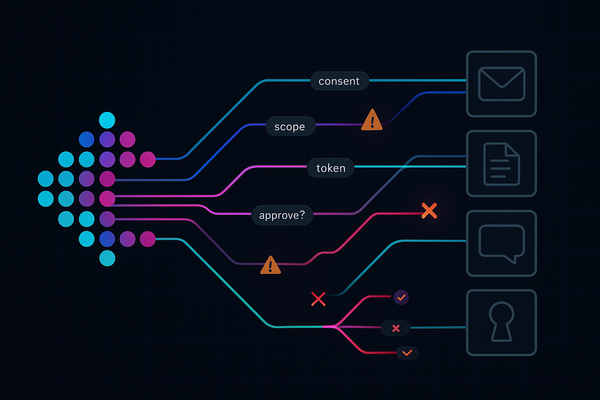
ai
Anthropic just showed what happens when your “helpful” AI agents become C2: 80–90% of an espionage op automated, humans just clicking approve. Lock down identity + connectors or you’re renting your SaaS to someone else’s botnet. 🤖🚨
weekly
A Chinese crew let a jailbroken AI run most of the intrusion while FortiWeb + Firebox burn in KEV and a contractor leak drops the playbook.
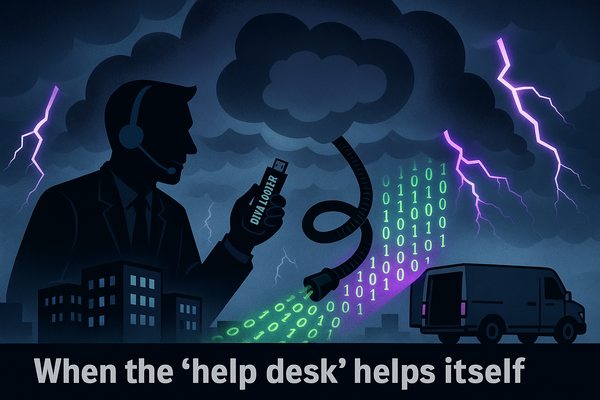
unc3886
UNC6040 is a financially motivated threat actor specializing in voice phishing (vishing) campaigns that abuse Salesforce Data Loader connected apps to gain unauthorized access and exfiltrate sensitive data. This novel attack vector leverages social engineering via telephone impersonation of...
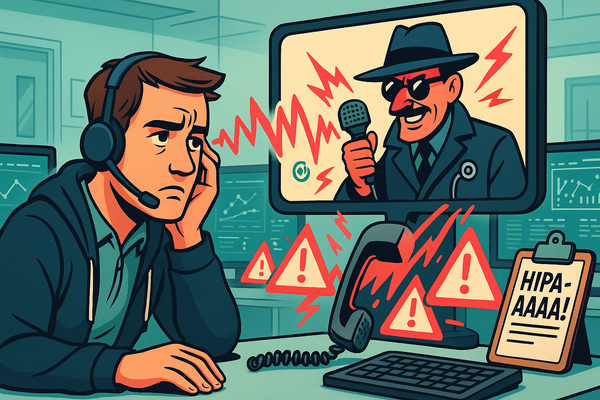
phishing
Healthcare organizations with SIEM deployments and immature SOCs face escalating risks from AI-driven vishing attacks leveraging voice deepfakes. This analysis outlines a pragmatic, phased approach for integrating AI-based voice deepfake detection and audio watermarking..
m-trends
I take a SPECULATIVE deep dive into what I think might be in the 2025 Mandiant M-TRENDS report.