
Residential Proxies: When "Normal" Traffic Becomes a Risk Multiplier
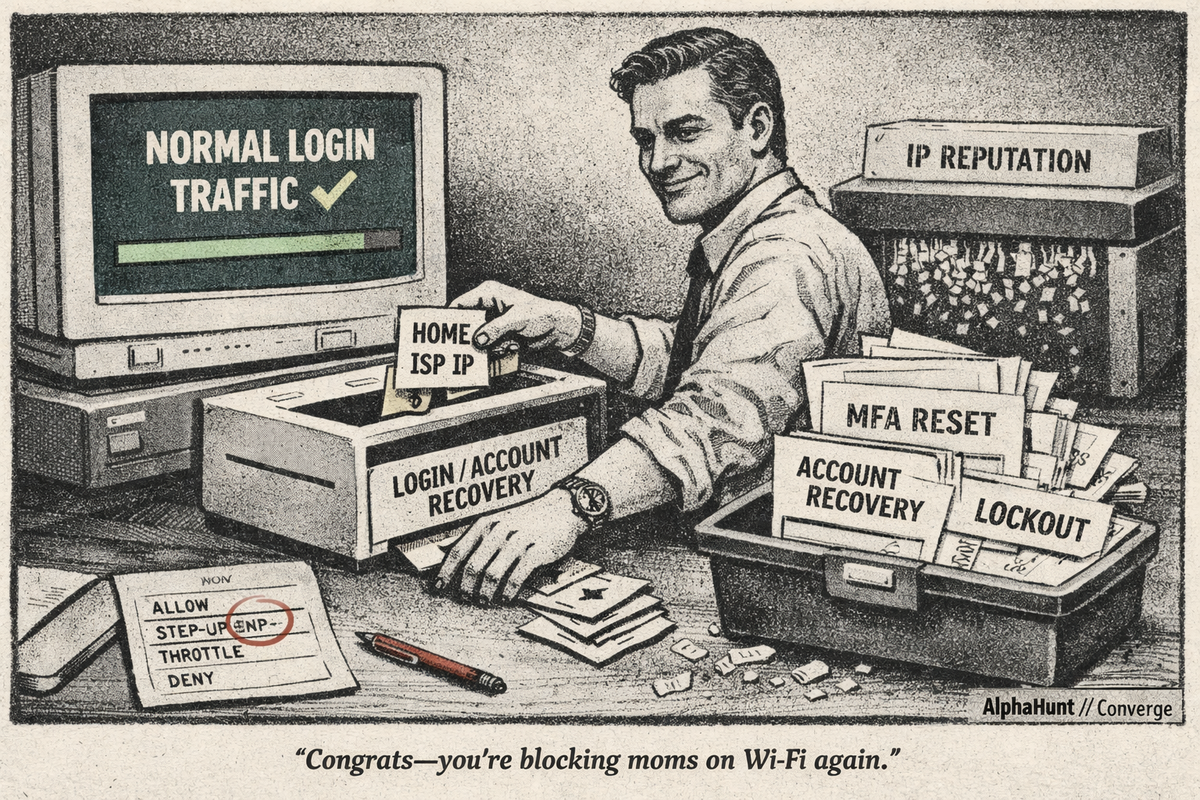
“Normal traffic” is now an attacker costume. 🥸🏠 Residential proxies borrow real home ISP IPs, making sprays/scrapes/SaaS intrusion blend in. Don’t rage-block—use tiered friction (identity+behavior) w/ proxy intel as a risk multiplier.

Executive brief (for directors)
Residential proxies let attackers route activity through real
household / small‑business ISP IPs, making abuse look like customer
traffic. That breaks the two cheapest controls most companies still lean
on: IP reputation and geo / velocity rules. The result is a
compounding effect: higher ATO/fraud/scraping success and more
customer friction if you respond with blunt blocking.
In January 2026, Google Threat Intelligence Group observed 550+
tracked threat groups using exit nodes tied to a single residential
proxy network in a seven‑day window. Enforcement actions also reduced the available device pool by millions, demonstrating that
proxy capacity is both large and materially disruptable.
Board-level takeaway: this is a loss + growth + customer trust
problem, not just a security tooling problem.
AlphaHunt
Stop doomscrolling, start decisioning. We chewed through the muck so your team doesn’t have to. → Subscribe!
Like this? Forward this to a friend!
(Have feedback? Did something resonate with you? Did something annoy you? Just hit reply! :))
TL;DR (what you should remember)
- Why it matters: residential proxies turn "trusted" consumer ISP
space into an attacker asset, degrading IP-based defenses and geo
signals. - What's new: proxy capacity is built via embedded SDKs,
"bandwidth sharing" clients, and compromised devices---creating a
large, global, constantly rotating pool. - Business impact: higher success rates for ATO, fraud,
scraping, and SaaS intrusion, plus increased support load and
customer friction if controls are too blunt. - What works: don't "block proxies." Use tiered risk decisions
driven by identity + behavior, with proxy intelligence
(provider + confidence + recency) as a strong signal. - How to govern it: require KPIs tied to loss, conversion, and
operational load (not just "blocks" and "alerts").
Why residential proxies are a board problem
Think of IP-based controls as "caller ID." Residential proxies don't
spoof caller ID---they use real numbers.
That creates a structural bind:
- If you trust consumer ISP traffic, you miss more abuse.
- If you block broadly, you punish real customers (conversion drop, churn, brand damage).
Scale makes this worse: modern residential proxy networks control
millions of devices/IPs, and hundreds of tracked threat groups were
observed leveraging just one network in days.
AlphaHunt Converge - Plug in your Flight Crew
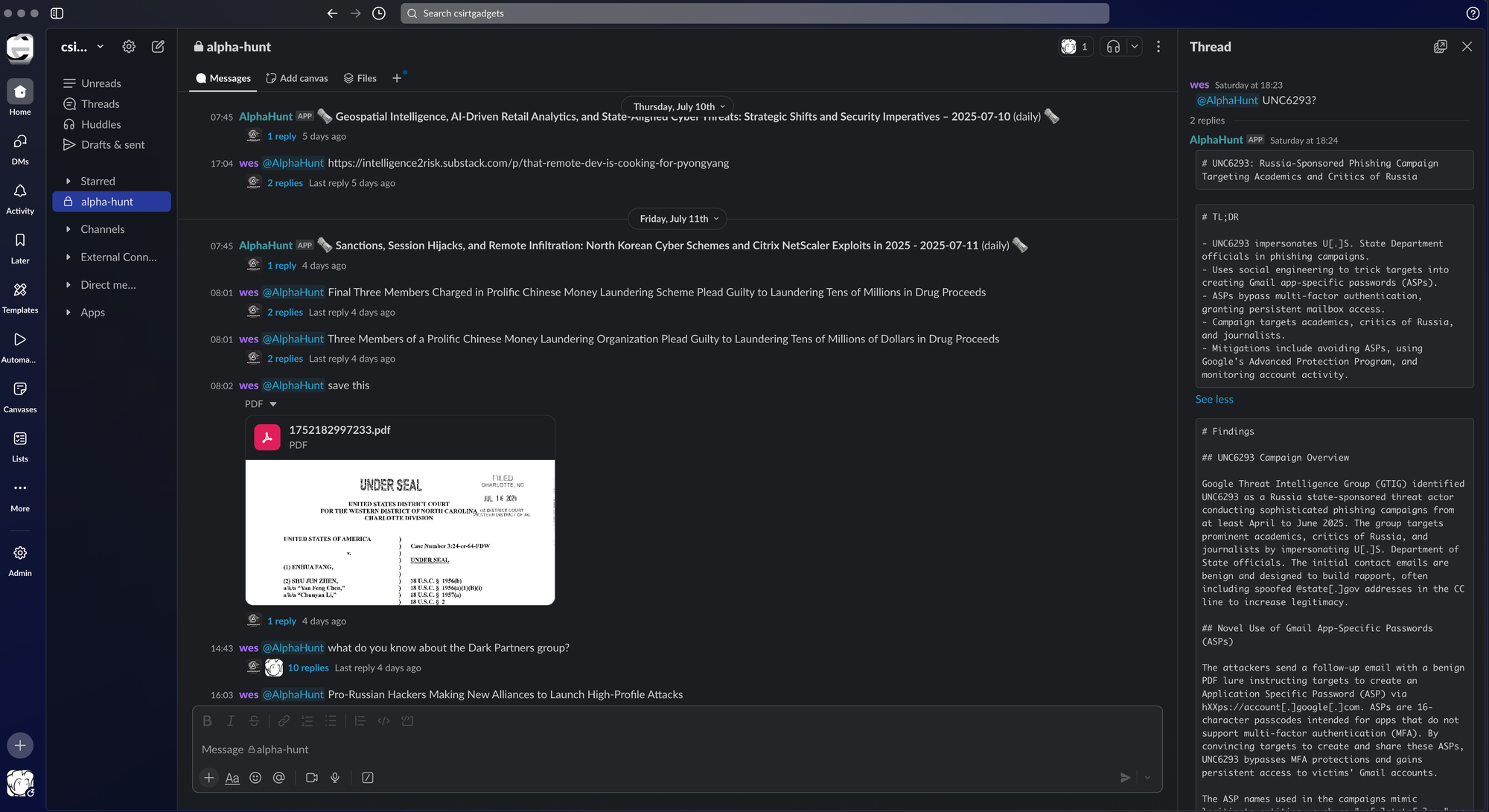
Get intelligence where it counts. No dashboards. No detours. AlphaHunt Converge teases out your intent, reviews the results and delivers actionable intel right inside Slack. We turn noise into signal and analysts into force multipliers.
Anticipate, Don’t Chase.
How attackers use residential proxies
Residential proxies act as an economic amplifier for abuse..
![[GAME THEORY] The Contractor Is Becoming the Intrusion Supply Chain](https://storage.ghost.io/c/06/e5/06e5730b-7d78-4713-9cec-6cba31d297f5/content/images/size/w600/2026/10/alphahunt-game-theory-the-contractor-is-becoming-the-intrusion-supply-chain-hero-2026-10-12.png)
![[SIGNALS WEEKLY] Edge Compromise, Real-Time Phishing, and Evidence Gaps](https://storage.ghost.io/c/06/e5/06e5730b-7d78-4713-9cec-6cba31d297f5/content/images/size/w600/2026/10/alphahunt-signals-weekly-edge-compromise-real-time-phishing-and-evidence-gaps-hero-2026-10-13.png)
![[GAME THEORY] The exploit is only one part of the business](https://storage.ghost.io/c/06/e5/06e5730b-7d78-4713-9cec-6cba31d297f5/content/images/size/w600/2026/10/alphahunt-game-theory-the-exploit-is-only-one-part-of-the-business-hero-2026-10-13.png)
![[GAME THEORY] The OAuth Prompt Is Becoming the New Diplomatic Pouch](https://storage.ghost.io/c/06/e5/06e5730b-7d78-4713-9cec-6cba31d297f5/content/images/size/w600/2026/10/alphahunt-game-theory-the-oauth-prompt-is-becoming-the-new-diplomatic-pouch-hero-2026-10-08.png)