
Cryptocurrency Evasion Tactics: The Houthi Network's Strategic Exploitation
The Houthi network, known for its involvement in the Yemeni conflict, has developed intricate operational methods to evade international sanctions and facilitate arms procurement through cryptocurrency...

Cryptocurrency Evasion Tactics: The Houthi Network's Strategic Exploitation
TL;DR
Key Points
-
- The Houthi network uses multiple cryptocurrency wallets to obscure fund flows and evade sanctions.
- Regulatory bodies need to enhance oversight and implement stricter KYC and AML regulations.
-
- Exploitation of exchanges like Garantex facilitates conversion of cryptocurrencies, evading financial scrutiny.
- International cooperation is crucial to monitor and disrupt these illicit financial activities.
-
- Complex front company networks mask illicit activities, complicating sanctions enforcement.
- Targeted sanctions against these entities can disrupt operations and limit resource procurement.
-
- Regulatory gaps in cryptocurrency transactions are exploited by the Houthi network.
- Comprehensive reforms are needed to close these gaps and enhance financial system integrity.
Research
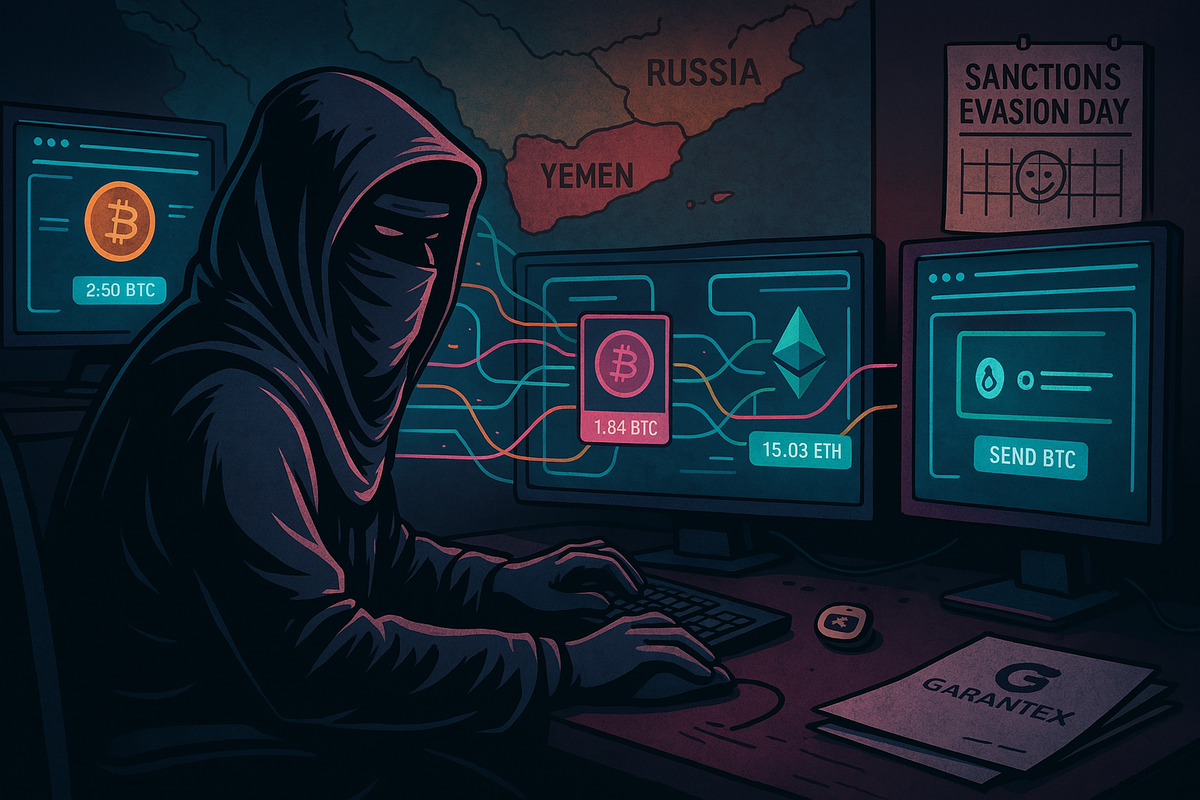
The Houthi network, involved in the Yemeni conflict, employs sophisticated methods to evade international sanctions and procure arms using cryptocurrency. They utilize multiple cryptocurrency wallets to enhance anonymity and exploit exchanges like Garantex to convert digital assets, bypassing traditional financial scrutiny. The network also establishes complex front company networks to mask illicit activities, leveraging international partnerships and regulatory gaps.
The operational methods of the Houthi network pose significant challenges for international sanctions enforcement. The anonymity provided by cryptocurrency transactions complicates efforts to trace and disrupt funding sources. To counter these tactics, regulatory bodies are urged to strengthen frameworks, enhance international cooperation, and invest in advanced blockchain analytics tools. These measures aim to improve monitoring, disrupt illicit operations, and close regulatory loopholes exploited by the network.
In the short term, increased regulatory scrutiny on cryptocurrency exchanges and enhanced international cooperation are anticipated. Long-term forecasts suggest the adoption of advanced blockchain analytics tools and evolving tactics by the Houthi network to adapt to increased scrutiny. Speculative scenarios include the potential use of decentralized finance platforms and non-fungible tokens to further obscure financial activities.
Techniques and Tactics Employed by the Houthi Network
-
Multiple Cryptocurrency Wallets:
- The Houthi network employs various cryptocurrency wallets to obscure the flow of funds and enhance anonymity. The U.S. Treasury recently identified eight specific wallets linked to their arms procurement and sanctions evasion efforts. These wallets are strategically used to facilitate transactions without drawing attention to the network's activities (U.S. Treasury, 2025).
-
Exploitation of Cryptocurrency Exchanges:
- The Houthi network has been linked to the Russian cryptocurrency exchange Garantex, which has been sanctioned for its role in facilitating illicit transactions. Garantex has been identified as a platform where the Houthis deposit funds, allowing them to convert cryptocurrencies into fiat currencies or other digital assets, thus evading traditional financial scrutiny. Recent reports indicate that nearly $1 billion in funds linked to Houthi operations were processed through these wallets (Cointelegraph, 2025).
-
Front Company Networks:
- The Houthis have established complex networks of front companies that serve as legitimate business facades to mask their illicit activities. These companies are used to conduct transactions that appear legitimate, thereby facilitating arms procurement and other sanctioned activities. The U.S. Treasury has noted that these front companies are integral to the Houthi's operational strategy, often involving international partners to enhance their reach (U.S. Treasury, 2025).
Role of International Partnerships and Regulatory Gaps
-
International Partnerships:
- The Houthi network benefits from international partnerships, particularly with entities in countries that have less stringent regulatory frameworks. These partnerships enable the Houthis to access resources and markets that would otherwise be closed to them due to sanctions. The support from Iran is particularly notable, as it provides both financial and logistical assistance to the Houthi operations (U.S. Treasury, 2025).
-
Regulatory Gaps:
- The current regulatory landscape presents significant gaps that the Houthi network exploits. The lack of comprehensive oversight in cryptocurrency transactions allows for the movement of funds without adequate scrutiny. The U.S. Treasury has highlighted the need to close these gaps to prevent illicit actors from using digital currencies to evade sanctions. The 2024 National Strategy for Combatting Terrorist and Other Illicit Financing emphasizes the importance of addressing these vulnerabilities (U.S. Treasury, 2024).
Implications for International Sanctions Enforcement
The operational methods employed by the Houthi network pose significant challenges for international sanctions enforcement. The use of cryptocurrency allows for anonymous transactions that are difficult to trace, complicating efforts to monitor and disrupt their funding sources. The establishment of front companies further obscures their activities, making it challenging for regulatory bodies to identify and sanction illicit operations.
Recommendations, Actions, Suggested Pivots, Forecasts and Next Steps..
(Subscribers Only)
Recommendations
-
Strengthen Regulatory Frameworks: Regulatory bodies should enhance oversight of cryptocurrency exchanges by implementing stricter Know Your Customer (KYC) and Anti-Money Laundering (AML) regulations. This includes requiring exchanges to conduct thorough due diligence on their users and transactions to prevent exploitation by illicit actors like the Houthi network. Engaging with industry stakeholders to develop standardized compliance measures can facilitate this process. Addressing potential resistance from exchanges by demonstrating the long-term benefits of compliance and security can help overcome challenges.
-
Enhance International Cooperation: Countries and international organizations must increase collaboration to share intelligence and best practices for monitoring cryptocurrency transactions linked to sanctions evasion. Establishing a global task force focused on cryptocurrency and sanctions enforcement can improve information sharing and operational coordination. This task force should include representatives from law enforcement, regulatory bodies, and financial institutions to ensure a comprehensive approach.
-
Invest in Blockchain Analytics Tools: Organizations should invest in advanced blockchain analytics tools such as Chainalysis and Elliptic to trace the flow of funds and identify patterns indicative of illicit activities. These tools can provide valuable insights into the Houthi network's operations, enabling more effective monitoring and disruption of their funding sources. Training personnel in the use of these tools will enhance their effectiveness in identifying suspicious transactions.
-
Develop Targeted Sanctions Against Front Companies: Conduct thorough investigations into the networks of front companies used by the Houthi network. This includes identifying key individuals and entities involved in these operations. Targeted sanctions against these entities can disrupt their operations and limit their ability to procure arms and other resources. A step-by-step approach could involve mapping out the corporate structures, identifying beneficial owners, and coordinating with international partners to ensure comprehensive sanctions.
-
Advocate for Comprehensive Regulatory Reforms: Engage with policymakers to advocate for comprehensive reforms in the regulatory landscape governing cryptocurrencies. This includes addressing the regulatory gaps that allow for the movement of funds without adequate scrutiny, as highlighted in the 2024 National Strategy for Combatting Terrorist and Other Illicit Financing. Propose specific legislative measures that can close these loopholes and enhance the overall integrity of the financial system.
Followup Research
Suggested Pivots
-
What specific blockchain analytics tools and methodologies can be employed to enhance the tracking and tracing of cryptocurrency transactions linked to the Houthi network, particularly focusing on the identified wallets and exchanges?
-
What successful examples of international regulatory collaboration in combating sanctions evasion can be leveraged to inform strategies for closing the regulatory gaps exploited by the Houthi network?
-
How have similar operational methods used by other networks in the past impacted global arms trafficking and sanctions enforcement, and what effective countermeasures were implemented in those cases?
-
In what specific ways can blockchain analytics tools be optimized to identify and disrupt the front company networks utilized by the Houthi network for arms procurement, including potential technological advancements?
-
Based on current trends in cybersecurity and sanctions evasion, what speculative scenarios could inform proactive measures against the potential evolution of the Houthi network's operational methods?
Forecast
Short-Term Forecast (3-6 months)
-
Increased Regulatory Scrutiny on Cryptocurrency Exchanges
-
The Houthi network's exploitation of cryptocurrency exchanges, particularly Garantex, will prompt regulatory bodies worldwide to enhance scrutiny of these platforms. The U.S. Treasury's recent sanctions against specific wallets and exchanges linked to the Houthis indicate a growing concern over cryptocurrency's role in facilitating illicit activities. This will likely lead to new regulations aimed at tightening Know Your Customer (KYC) and Anti-Money Laundering (AML) requirements across the cryptocurrency market, affecting not only exchanges but also legitimate users and the broader financial ecosystem.
-
Examples:
- The sanctions against Garantex, which was linked to nearly $1 billion in funds associated with Houthi operations, highlight the urgent need for regulatory reforms (Cointelegraph, 2025).
- The 2024 National Strategy for Combatting Terrorist and Other Illicit Financing emphasizes the need to close regulatory gaps that allow illicit actors to exploit the financial system (U.S. Treasury, 2024).
-
-
Enhanced International Cooperation on Sanctions Enforcement
-
In response to the Houthi network's sophisticated methods of sanctions evasion, we anticipate a surge in international collaboration among law enforcement and regulatory agencies. This cooperation will focus on sharing intelligence and best practices for monitoring cryptocurrency transactions linked to sanctions evasion. The establishment of task forces or coalitions may emerge to address these challenges collectively.
-
Examples:
- The U.S. Treasury's emphasis on international partnerships indicates a shift towards a more coordinated global response to combat illicit financing, as seen in the recent sanctions targeting Houthi financial facilitators (U.S. Treasury, 2025).
- Historical initiatives, such as the Financial Action Task Force (FATF) efforts to combat money laundering, provide a framework for how this cooperation could evolve.
-
Long-Term Forecast (12-24 months)
-
Adoption of Advanced Blockchain Analytics Tools
-
As the Houthi network continues to leverage cryptocurrency for sanctions evasion, we expect a significant increase in the adoption of advanced blockchain analytics tools by regulatory bodies and law enforcement agencies. Tools like Chainalysis and Elliptic will become essential for tracing illicit financial flows and identifying patterns indicative of sanctions evasion. This technological advancement will enhance the ability to monitor and disrupt the Houthi network's operations.
-
Examples:
- The growing sophistication of blockchain analytics tools will mirror trends seen in other sectors, such as financial services, where technology has been pivotal in combating fraud and illicit activities.
- Successful tracking of cryptocurrency transactions in past cases, such as the seizure of funds linked to ransomware attacks, will serve as a precedent for future enforcement actions.
-
-
Evolving Tactics of the Houthi Network
-
Over the next 12-24 months, the Houthi network is likely to adapt its operational methods in response to increased scrutiny and regulatory measures. This may include diversifying their cryptocurrency wallets, utilizing more obscure exchanges, or enhancing their front company networks to further obscure their activities. The network may also seek to exploit emerging technologies or regulatory gaps in new jurisdictions.
-
Examples:
- Historical patterns of adaptation among similar networks, such as those involved in drug trafficking or human smuggling, demonstrate that as enforcement measures tighten, illicit actors often pivot to new methods to evade detection.
- The Houthi network's established relationships with international partners, particularly in regions with lax regulations, will provide them with the necessary resources to adapt and continue their operations.
-
Speculative Scenarios
-
Utilization of Decentralized Finance (DeFi) Platforms: The Houthi network may begin to leverage DeFi platforms to facilitate transactions without the oversight of traditional financial institutions. This could allow for even greater anonymity and the ability to bypass regulatory scrutiny.
-
Integration of Non-Fungible Tokens (NFTs): The network might explore the use of NFTs as a means of transferring value or assets, potentially using them as collateral for loans or to obscure the origins of funds.
Appendix
References
- (2025-04-02) - Treasury Sanctions Houthi Network Procuring Weapons and Commodities from Russia
- (2025-04-03) - US sanctions 8 crypto wallets tied to Garantex exchange and the Yemeni Houthi movement
- (2025-04-04) - U.S. Treasury Targets Russian Elements of the Houthis' Iran-Backed Financing Network
- (2024-05-16) - Treasury Announces 2024 National Illicit Finance Strategy
MITRE ATTACK
Techniques
-
T1070 (Indicator Removal) - Adversaries attempt to hide their tracks by removing indicators of compromise from the host. The Houthi network's use of multiple cryptocurrency wallets and front companies aligns with this technique as they seek to obscure their financial activities and evade detection.
- The Houthi network's operational methods, including the use of cryptocurrency for sanctions evasion, necessitate the removal of digital footprints to avoid scrutiny from regulatory bodies.
- Sub-techniques:
- T1070.001 (Clear Windows Event Logs) - This sub-technique is relevant as it allows adversaries to erase logs that could indicate illicit activities.
- T1070.004 (File Deletion) - Deleting files related to transactions or communications can help the Houthi network maintain operational security.
- T1070.006 (Timestomp) - This technique can be used to modify timestamps on files to mislead investigators.
Tactics
- TA0005 (Defense Evasion) - This tactic encompasses techniques that adversaries use to avoid detection throughout their operational lifecycle. The Houthi network's methods of using cryptocurrency and front companies exemplify defense evasion as they seek to operate under the radar of international sanctions.
Procedures
-
T1070.001 (Clear Windows Event Logs) - This procedure is relevant as it demonstrates how the Houthi network might clear logs to hide their financial transactions and activities related to arms procurement.
-
T1070.004 (File Deletion) - The deletion of files associated with cryptocurrency transactions can be a critical procedure for the Houthi network to maintain anonymity.
Software
-
Chainalysis - A blockchain analysis tool that can be used to trace cryptocurrency transactions. While the Houthi network may seek to evade detection, tools like Chainalysis are essential for law enforcement to track illicit financial flows.
-
Elliptic - Another blockchain analytics platform that helps in identifying suspicious activities in cryptocurrency transactions, relevant for monitoring the Houthi network's operations.
MITIGATIONS
-
M1041 (User Activity Monitoring) - Implementing user activity monitoring can help detect unusual patterns in cryptocurrency transactions, potentially flagging Houthi network activities.
-
M1040 (Audit and Logging) - Ensuring comprehensive logging of all transactions can help in identifying and investigating suspicious activities related to sanctions evasion.
AlphaHunt
(Have feedback? Did something resonate with you? Did something annoy you? Just hit reply! :))
Get compound questions like this:
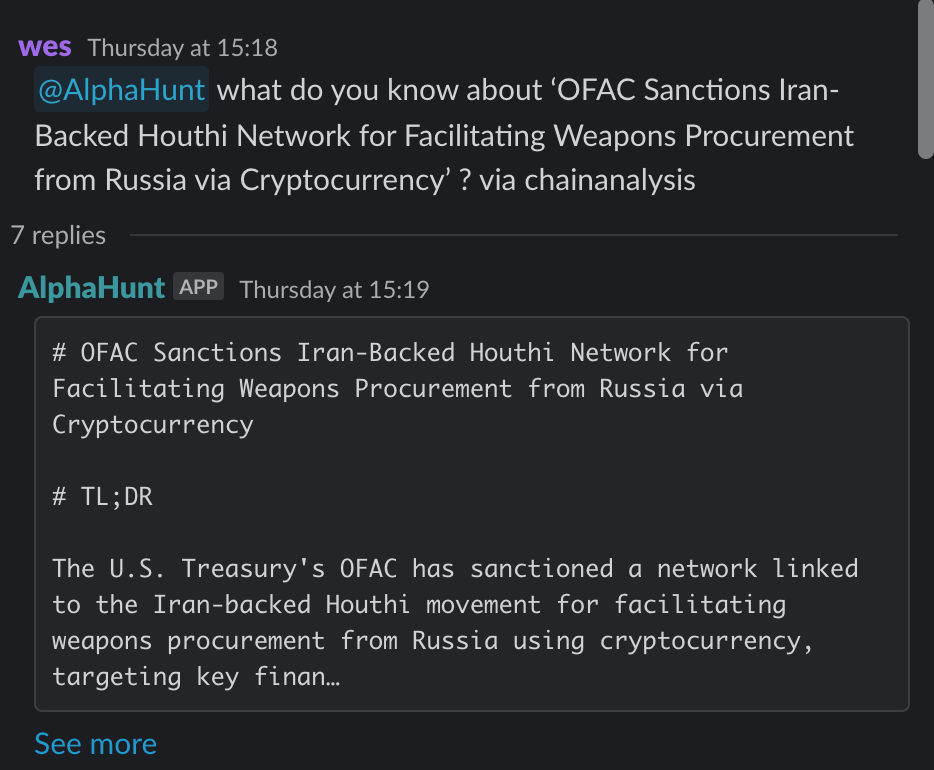
- what do you know about ‘OFAC Sanctions Iran-Backed Houthi Network for Facilitating Weapons Procurement from Russia via Cryptocurrency’ ? via chainanalysis
- What are the specific methods used by the Houthi network to evade sanctions and facilitate arms procurement through cryptocurrency?
Does it take a chunks out of your day? Would you like help with the research?
This baseline report was thoughtfully researched and took 10 minutes.. It's meant to be a rough draft for you to enhance with the unique insights that make you an invaluable analyst.
We just did the initial grunt work..
Are you ready to level up your skillset? Get Started Here!
Did this help you? Forward it to a friend!
(c) 2025 CSIRT Gadgets, LLC
License - CC BY-SA 4.0
![[DEEP RESEARCH] Who Owns the Cold Chain When the Controller Goes Online?](https://storage.ghost.io/c/06/e5/06e5730b-7d78-4713-9cec-6cba31d297f5/content/images/size/w600/2026/10/alphahunt-deep-research-who-owns-the-cold-chain-when-the-controller-goes-online-hero-2026-10-19.png)
![[SIGNALS WEEKLY] Edge Brokers, Ephemeral Supply Chains, and Control-Plane Pivots](https://storage.ghost.io/c/06/e5/06e5730b-7d78-4713-9cec-6cba31d297f5/content/images/size/w600/2026/10/alphahunt-signals-weekly-edge-brokers-ephemeral-supply-chains-and-control-plane-pivots-hero-2026-10-20.png)
![[DEEP RESEARCH] Silent Lynx and the Intelligence Value of Water](https://storage.ghost.io/c/06/e5/06e5730b-7d78-4713-9cec-6cba31d297f5/content/images/size/w600/2026/10/alphahunt-deep-research-silent-lynx-and-the-intelligence-value-of-water-hero-2026-10-16.png)
![[GAME THEORY] The Contractor Is Becoming the Intrusion Supply Chain](https://storage.ghost.io/c/06/e5/06e5730b-7d78-4713-9cec-6cba31d297f5/content/images/size/w600/2026/10/alphahunt-game-theory-the-contractor-is-becoming-the-intrusion-supply-chain-hero-2026-10-12.png)